Library home page

A Book of Mormons

Richard S. Van Wagoner and Steven C. Walker

Copyright 1982, Signature Books
Salt Lake City, Utah


Contents

Anthony W. Ivins
Heber C. Kimball
J. Golden Kimball
Jesse Knight
Harold B. Lee
John D. Lee
Amasa Lyman
Amy Brown Lyman
Francis M. Lyman
Karl G. Maeser
Thomas B. Marsh
David O. McKay
Edward Partridge
David W. Patten
Romania Pratt Penrose
W. W. Phelps
Orson Pratt
Parely P. Pratt
Alice Louise Reynolds
Willard Richards
Sidney Rigdon
B. H. Roberts
Porter Rockwell
Aurelia Rogers
Ellis Shipp
Emma Smith
George A. Smith

George Albert Smith
Hyrum Smith
Joseph Smith
Joseph F. Smith
Joseph Fielding Smith
Lucy Mack Smith
Reed Smoot
Eliza R. Snow
Erastus Snow
Lorenzo Snow
Fanny Stenhouse
James E. Talmage
Annie Clark Tanner
John Taylor
John W. Taylor
Moses Thatcher
Chief Walker
Daniel H. Wells
Emmeline B. Wells
David Whitmer
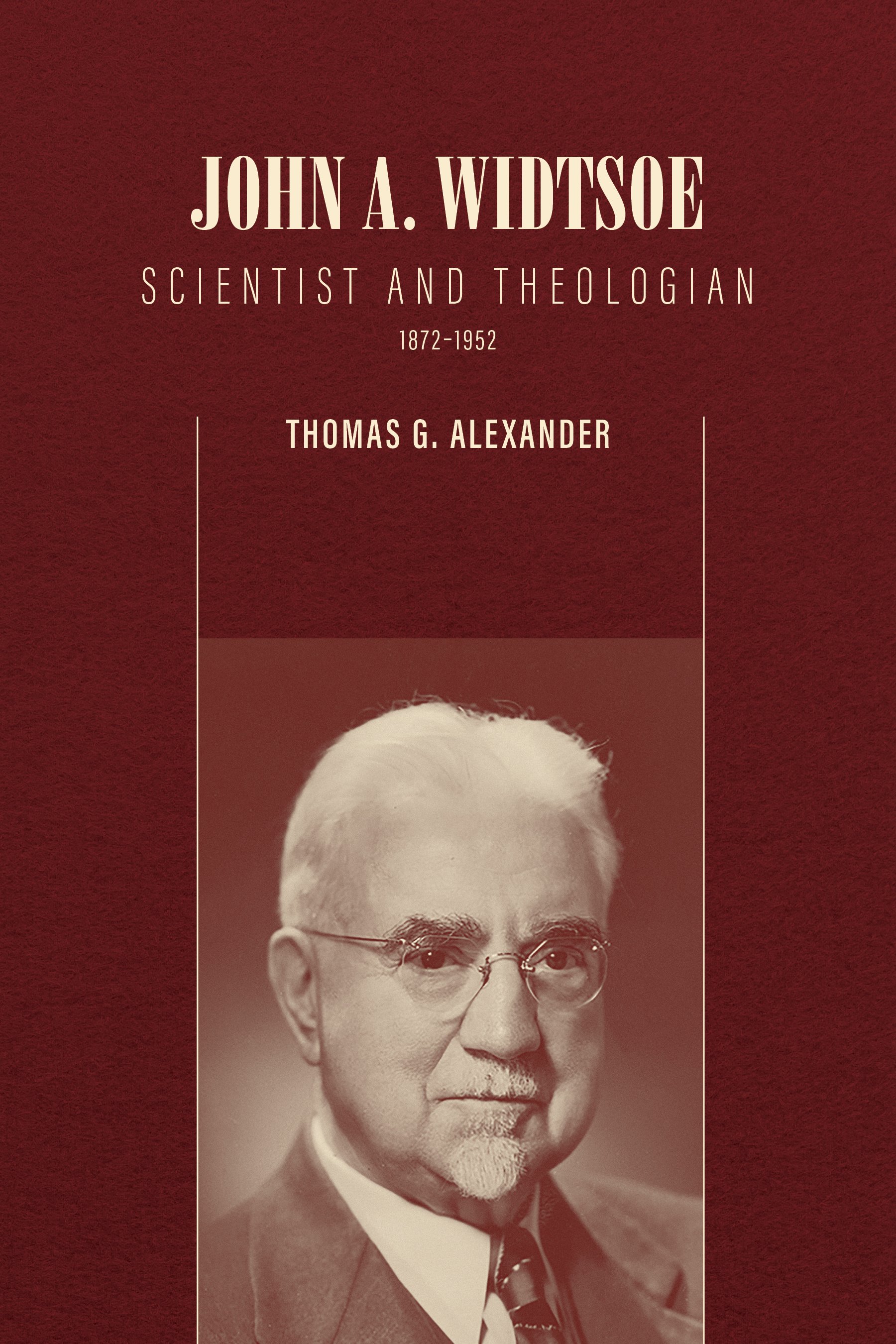
John A. Widtsoe
Wilford Woodruff
Brigham Young
Brigham Young Jr.
Zina D. H. Young
cover


Ellis Shipp (1847-1939)
Ellis Shipp

Ellis Shipp was a pioneer woman and an obstetrician. Photograph courtesy LDS Church Archives.


Family Background

1847. January 20: Ellis Reynolds was born in Davis County, Iowa. Soon after her birth, the family converted to Mormonism. They moved to Utah in 1852 and settled in Pleasant Grove.

In 1865 Ellis was "adopted" into the home of Brigham Young. Educated in the Young family school taught by Karl G. Maeser, she later attended the University of Deseret.


Plural Wife

1866. May 5: Married Milford B. Shipp: "He was to me all that the enlivened fancy of girlhood or the matured judgment of woman could picture in her imagination. So kind and affectionate, so faithful to the cause of Mormonism. … He was ambitious, ardent and energetic in all that was noble and laudable. Enthusiastic and spirited in conversation. In truth, I never saw a person who could so enchant and fascinate by the power of language." The Shipps had ten children, five of whom died in infancy.

Milford Shipp operated a hat and shoe store in Fillmore, Utah, for several years. When the store failed, the family returned to Salt Lake. Milford later married three plural wives.


Student

Eliza R. Snow began urging women in the late 1860s to become physicians in order to keep men out of the delivery room. In 1873 Brigham Young added, "The time has come for women to come forth as doctors in these valleys of the mountains."

Determined to care for her children and prepare for medical school, Ellis Shipp established a rigorous schedule. "Last night I wrote down my work for today which is as follows: rise at four in the morning, dress, make a fire, sweep, wash in cold water, comb my hair, clean my teeth. Write a few lines in my journal. Write a letter to Grandmother. Read a chapter in Dr. Bunn on health. Read a few extracts from Johnson. Dress the children, make bed, sweep, dust and prepare my room for the breakfast table. Breakfast at nine. Sew on the machine until three—dinner hour. After dinner call on Sister Jones, who is sick. Wash and prepare the children for bed; from six till eight, knit or do some other light work. Review my actions for the day—offer my devotions to heaven and retire at nine."

Ellis Shipp with nursing students
Dr. Shipp (center row on right) and nursing students, courtesy LDS Church Archives.

Four years later, in 1872, medical school still seemed a remote possibility: "I know that I am tired of this life of uselessness and unaccomplished desires, only so far as cooking, washing dishes and doing general housework goes. I believe that woman's life should not consist wholly and solely of routine duties."

Milford provided little help, but with supplements from her sister-wives, Ellis worked her way as a seamstress through the Women's Medical College of Pennsylvania. "How pure and heavenly is the relationship of sisters in the holy order of polygamy," she wrote. "How beautiful to contemplate the picture of a family where one works for [p.260] the interest, advancement, and well-being of all."


Physician

1878. Shipp received an M.D. in March. Returning to Utah, she and sister-wife Maggie Shipp, with Romania Pratt and Martha Paul, were set apart to the "ecclesiastical calling" of administering medicine to the Saints. (Maggie and Milford Shipp received their M.D.s in 1883.)

Dr. Shipp advertised herself as a "Physician and Surgeon; Special attention given to Obstetrics, diseases of women and minor surgery," and opened a school of obstetrics and nursing "with the object of qualifying women for the important offices of nurse and accoucheur." During the school's first four years, she delivered over a thousand lectures while continuing her own practice.

Supportive of Dr. Shipp and other female doctors, the Deseret News urged "that the competent and educated doctors of our community … be patronized when necessary, by those of their own sex and faith, in preference to others. This is one of the occupations in which qualified women can act to advantage, and is a gesture of the woman's rights question we can endorse and support."

By 1893 Dr. Shipp had attended to 1,543 obstetrical and 2,350 gynecological cases. She delivered more than five thousand babies during her career, including N. Eldon Tanner.

One of the most highly trained physicians in Utah, Dr. Shipp did postgraduate work at the University of Michigan and at New York and Philadelphia hospitals. Despite her training as a general practitioner, she preferred to deal with female patients: "Let men care for their own sex and do the major operations. I have never had an ambition to take such responsibilities, for even men have fatal cases and, if a woman should have them, [she] would always be condemned because she was a woman."

She was the personal physician of Emmeline B. Wells, Eliza R. Snow, and Zina D. H. Young. She served as staff physician at Deseret Hospital, specializing in "care of women and children."


Women's Advocate

1898. Shipp was called to the Relief Society General Board, where she served for nine years. A personal friend of women's rights leaders Susan B. Anthony, Elizabeth Stanton, and Clara Barton, she was also an officer in two Salt Lake cultural societies—the Reapers' Club and the Utah Women's Press Club.

Concerned that so few Utah women were going to medical school, she observed, "In a land renowned for its equal opportunities for women, it's simply amazing such a few follow a profession so befitting them."


Death

In her later years, she reflected, "I do not feel my spirit Great. But oh, I have suffered and pray it has never been in vain."

1939. January 31: Died of neck cancer at her home at 1320 Michigan Avenue in Salt Lake City at the age of ninety-two. Buried in the Salt Lake City Cemetery.


Sources
Casterline, Gail Farr. "Ellis R. Shipp." Sister Saints. Edited by Vicky Burgess-Olson. Provo, Utah: Brigham Young University Press, 1978.
Salt Lake City, Utah. LDS Church Archives. Journal History, 13 August 1878.
Musser, Ellis Shipp. The Early Autobiography and Diary of Ellis R. Shipp, M.D. Salt Lake City: Deseret News Press, 1962.


Copyright © Signature Books, LLC. All rights reserved. No part of this text or graphics may be reproduced in any form or by any means without written permission from Signature Books, LLC